
In the interest of transparency, we earn a commission on some purchases made through links on this site. As an Amazon Associate I earn from qualifying purchases.
Wearable health technology delivers its greatest value when measurement accuracy and regulatory validation take priority over sheer feature count. For professionals evaluating these devices in 2026, the critical distinction lies between marketing claims and clinically validated metrics. A single-lead ECG genuinely validated for atrial fibrillation detection proves more valuable than a device claiming to track a dozen metrics with unclear accuracy. This buying guide equips Canadian communications professionals and enterprise decision-makers with the criteria needed to assess wearable health devices, from fitness trackers like the Google Fitbit Air and Garmin Vivoactive 6 to advanced monitors offering ECG and blood oxygen measurement.
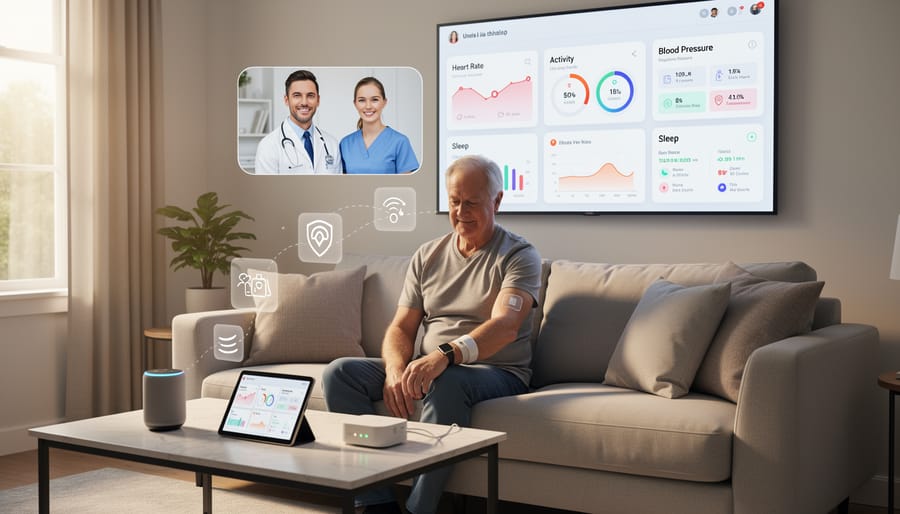
The shift from basic step counting to continuous biometric monitoring reflects broader integration within connected healthcare ecosystems. Today’s wearables track sleep staging, heart rate variability, blood oxygen levels, respiration patterns, and recovery metrics, while many enable text communication and real-time data sharing with healthcare providers. Consumer health technology has expanded to include at-home ECG and lab testing capabilities, positioning these devices as diagnostic tools rather than simple activity monitors.
Selecting the right wearable requires matching device capabilities to specific healthcare needs and workflow requirements. For enterprise deployments or personal use, understanding device categories, measurement methodologies, and clinical validation standards prevents costly mistakes. The products reviewed here span from screenless fitness trackers at accessible price points to comprehensive smartwatches with advanced health monitoring, each evaluated against measurement accuracy standards and practical utility rather than marketing specifications alone.
Understanding Healthcare Wearable Categories
Fitness Trackers and Activity Bands
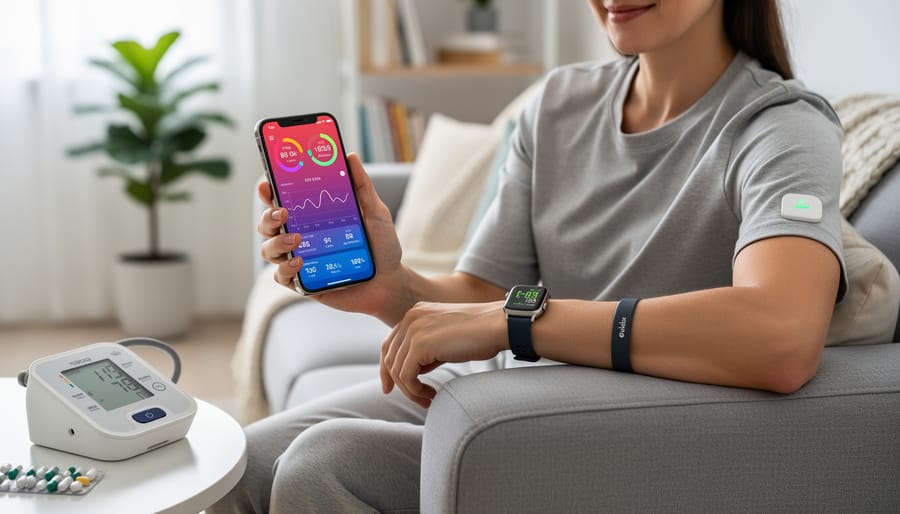
Fitness trackers and activity bands serve as entry-level healthcare wearables designed for continuous monitoring of daily movement, heart rate, and sleep patterns. These devices prioritize long-term wearability over advanced communication features, making them particularly suitable for users who need consistent health data collection without constant screen interaction.
The category divides into two distinct approaches. Screen-based fitness trackers incorporate small displays that show real-time metrics, notifications, and workout summaries. This design appeals to users who want immediate feedback during exercise sessions or the ability to check progress throughout the day. However, the screen requires more frequent charging, typically every three to five days depending on usage intensity.
Screenless fitness trackers eliminate the display entirely, extending battery life to one week or longer while reducing the device to a simple band worn continuously. The Google Fitbit Air, which Wired identifies as the best screenless fitness tracker at $100, exemplifies this category’s strengths: uninterrupted wear during sleep, workouts, and daily activities without the distraction of notifications or the need to remove the device for charging every few nights.
For healthcare monitoring purposes, screenless options often demonstrate better adherence rates because users forget they’re wearing them. This matters significantly for sleep analysis and recovery tracking, which require consistent overnight data collection. Screen-based trackers work better when you need to log specific workouts, view trends during the day, or want a device that bridges fitness tracking with basic smartwatch functionality.
Smartwatches with Health Features
Smartwatches represent the convergence of communication and health monitoring, offering both text messaging capabilities and continuous biometric tracking in a single wrist-worn device. Unlike dedicated fitness trackers, smartwatches prioritize screen-based interaction and smartphone integration, allowing users to answer texts, manage notifications, and access health data through a touchscreen interface. This dual functionality makes them attractive for professionals who want consolidated device management rather than carrying separate communication and health monitoring tools.
The core health sensors in smartwatches typically include optical heart rate monitors, sleep tracking, blood oxygen (SpO2) measurement, and activity recognition. Higher-end models add ECG capabilities and more advanced metrics like heart rate variability and respiration monitoring. These sensors operate continuously in the background while the device handles normal smartwatch functions, creating a comprehensive picture of daily health patterns without requiring dedicated monitoring sessions.
Battery life presents the primary trade-off in smartwatch design. Always-on displays, frequent notifications, and cellular connectivity drain power significantly faster than simple activity trackers. Most smartwatches require daily charging, while dedicated fitness trackers often last five to seven days between charges. This difference matters for continuous health monitoring: devices that need nightly charging can’t track overnight metrics like sleep staging or nocturnal heart rate variability as reliably as longer-lasting alternatives. Users prioritizing uninterrupted health data collection should weigh whether communication features justify shorter battery life for their specific monitoring needs.
Specialized Health Monitors
Specialized health monitors represent the clinical-grade tier of wearable technology, designed for specific diagnostic or therapeutic monitoring rather than general fitness tracking. This category includes devices with regulatory clearance for medical applications, such as single-lead ECG monitors validated for atrial fibrillation detection, as well as emerging form factors like smart rings that prioritize continuous biometric collection over smartphone-style interaction. These devices typically focus on a narrower set of health metrics but measure them with greater accuracy and clinical validity than multi-function smartwatches.
The defining characteristic of specialized monitors is their regulatory status. Devices with Health Canada or FDA clearance have undergone clinical validation studies demonstrating that their measurements meet medical-grade accuracy standards for specific conditions. A single-lead ECG that is genuinely validated for AFib detection provides more clinical value than a device claiming to track a dozen metrics with unclear accuracy. This validation matters when wearable data will inform treatment decisions or be shared with healthcare providers.
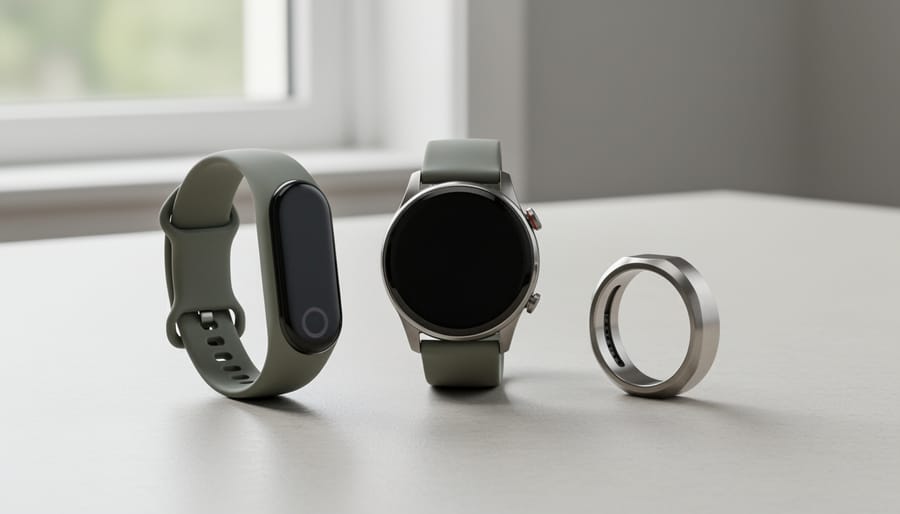
Smart rings illustrate the category’s innovation in form factor: they eliminate screens entirely to maximize battery life and wearing compliance, focusing on passive collection of sleep staging, heart rate variability, and blood oxygen data. Other specialized monitors include continuous glucose monitors for diabetes management, medical-grade blood pressure cuffs with wireless connectivity, and devices designed for specific conditions like sleep apnea or cardiac arrhythmias. When evaluating these devices, prioritize those with published validation data and regulatory clearance over marketing claims about advanced sensing capabilities.
Critical Buying Factors for Healthcare Wearables
Measurement Accuracy and Independent Validation
Validation separates meaningful health data from novelty features. When a manufacturer claims a device tracks twelve biometrics, the critical question is whether any of those measurements have been independently verified against clinical-grade equipment or cleared by health regulators. Most consumer wearables undergo no such scrutiny, the sensors produce numbers, but those numbers may drift from actual physiology by margins that render them useless for health decisions.
Genuinely validated metrics carry documented proof: peer-reviewed studies comparing the device to gold-standard medical instruments across diverse populations, or regulatory clearance from Health Canada or the FDA for specific clinical uses. A single-lead ECG validated for atrial fibrillation detection, for example, delivers actionable clinical value because it meets defined accuracy thresholds for identifying a serious cardiac arrhythmia. By contrast, a device advertising heart rate variability, blood oxygen, respiration rate, stress scores, and recovery metrics without independent validation offers speculation dressed as data.
To identify validated claims, look for specific regulatory clearance statements rather than vague wellness language. Terms like “monitors heart rhythm” differ fundamentally from “FDA-cleared for AFib detection.” Check whether the manufacturer publishes validation studies or cites third-party testing, and verify that claims specify which metrics earned clearance, approval for one function does not validate the device’s entire sensor suite. Prioritize devices transparent about their validation scope, and treat unverified metrics as interesting trends rather than diagnostic tools.
Regulatory Clearance and Clinical Standards
Consumer wellness wearables and medical-grade devices sit on opposite sides of a regulatory divide that directly affects measurement reliability. Health Canada and the U.S. Food and Drug Administration (FDA) classify devices according to their intended use and risk level: wellness trackers that measure general activity and heart rate typically require no premarket approval, while devices claiming to diagnose or monitor specific medical conditions must undergo clinical validation and regulatory clearance before they can make those claims legally.
This distinction matters when you’re choosing a device for serious health monitoring. A fitness tracker that displays heart rate continuously may provide useful trend data for exercise planning, but it hasn’t been tested against clinical standards for accuracy. By contrast, a smartwatch with FDA-cleared ECG functionality has demonstrated in controlled studies that it can detect atrial fibrillation with a defined level of sensitivity and specificity. The difference is the depth of validation behind the measurement, not just the presence of the sensor.
Regulatory clearance becomes critical when you need actionable clinical information, monitoring a known heart condition, tracking recovery from surgery, or sharing data with your healthcare provider for diagnosis or treatment decisions. For general fitness tracking, sleep pattern observation, or motivational feedback during workouts, consumer-grade devices without clearance often suffice. The key is matching the device’s validated capabilities to your specific health goals rather than assuming every biometric reading carries the same clinical weight.
Sensor Suite and Health Metrics
Modern healthcare wearables integrate multiple sensors to capture different physiological signals, but the clinical utility of each metric varies significantly. Heart rate monitoring serves as the foundation for most devices and proves useful for tracking exercise intensity, detecting resting heart rate trends, and identifying irregular rhythms. However, optical heart rate sensors, which measure blood flow through the skin, offer different accuracy levels depending on activity type, with some devices showing substantial error during high-intensity intervals or resistance training.
Blood oxygen (SpO2) sensors estimate oxygen saturation levels and gained prominence during respiratory health concerns, though consumer-grade implementations typically lack the precision of medical pulse oximeters. Sleep staging attempts to classify sleep phases (light, deep, REM) using movement and heart rate data, providing general patterns rather than diagnostic-level accuracy. Heart rate variability (HRV) measures the variation between heartbeats and serves as an indicator of recovery status and autonomic nervous system balance, making it valuable for training optimization and stress monitoring when measured consistently under controlled conditions.
Respiration monitoring tracks breathing rate during sleep and rest, offering insights into sleep quality and potential breathing irregularities. At-home ECG represents a more clinically significant capability, a single-lead electrocardiogram genuinely validated for atrial fibrillation detection delivers more medical value than devices claiming to track numerous metrics with unclear accuracy. When evaluating sensor suites, prioritize devices where specific metrics align with your health goals and carry independent validation or regulatory clearance for those measurements, rather than choosing based on feature count alone.
Battery Life and Practical Usability
Battery life directly affects whether a wearable becomes a consistent health monitoring tool or an abandoned gadget. Devices requiring daily charging interrupt continuous data collection, particularly problematic for sleep tracking, which demands overnight wear. Screenless trackers typically deliver seven to ten days of battery life because they eliminate the power drain of displays and notification systems, whereas smartwatches with colour screens often require charging every one to two days. This practical difference explains why screenless options show higher adherence rates for recovery monitoring: users who wake up, charge their smartwatch, and leave it on the nightstand before bed create data gaps that undermine longitudinal health insights. For clinical applications where continuous physiological trends matter more than real-time screen interactions, prioritize battery endurance over display features.
Common Mistakes to Avoid When Buying Health Wearables
Choosing the wrong health wearable can waste money and create false expectations about your health monitoring capabilities. Here are the critical mistakes to watch for when evaluating devices.
The most common error is selecting a device based on its feature list rather than validated performance. A tracker advertising fifteen different health metrics sounds impressive until you realize none of them meet clinical accuracy standards. As validation experts note, a single-lead ECG genuinely validated for AFib detection provides more clinical value than a dozen unvalidated metrics. Before buying, verify which specific measurements have independent validation or regulatory clearance, not just which ones appear in the marketing materials.
Subscription costs represent another hidden expense buyers frequently overlook. While the device itself might cost $100 to $300, ongoing fees for advanced analytics, sleep coaching, or readiness scores can add $60 to $120 annually. Calculate the total three-year ownership cost, not just the upfront price, and determine whether the subscription features genuinely support your health goals or simply repackage basic data you already own.
Compatibility issues often emerge after purchase. Some wearables sync only with proprietary apps that can’t share data with your healthcare provider’s systems. If your doctor uses a specific patient portal or remote monitoring platform, confirm the device integrates with it before buying. Cross-platform compatibility between Android and iOS matters if you anticipate switching phones within the device’s lifespan.
Heart rate monitoring accuracy varies significantly across devices, yet buyers often assume all optical sensors perform equally. The same tracker that delivers accurate readings during walking might fail completely during high-intensity intervals. Check whether the manufacturer publishes validation studies for your intended use case, particularly if you need the data for clinical decisions.
Long-term wearability determines whether you’ll actually use the device consistently. A smartwatch packed with features won’t help if its two-day battery life means you remove it nightly for charging, missing critical sleep data. Consider whether you prefer screenless bands for extended battery life, whether the form factor suits 24/7 wear including sleep, and whether the device can withstand daily activities like showering and swimming without removal.
Google Fitbit Air

The Google Fitbit Air stands out as the rare screenless tracker that prioritizes what matters most for healthcare monitoring: continuous wear and battery longevity. At $100, it strips away the display and notification features that drain power, delivering instead a lightweight sensor pod you can forget you’re wearing while it collects heart rate, activity, and sleep data around the clock. This design choice yields week-long battery life between charges, removing the compliance barrier that plagues smartwatches requiring daily charging and interrupting overnight sleep tracking.
Screenless tracking makes particular sense for clinical contexts where the goal is passive data collection rather than real-time feedback. Healthcare providers value consistent longitudinal data, capturing every night’s sleep architecture, every day’s step count, every hour’s resting heart rate, far more than a wrist-glanceable dashboard. The Air’s form factor encourages exactly that adherence: patients wear it continuously because it doesn’t buzz, light up, or demand attention. You retrieve the data through the companion app when needed, not compulsively throughout the day.
The device has earned a 4.6 rating from 2,347 customers and remains in stock, reflecting solid execution of a focused concept. It won’t replace a smartwatch for users who want text notifications or touchscreen control, but for those tracking recovery metrics, monitoring baseline activity levels, or collecting sleep data for a healthcare provider, the screenless approach removes friction. The Air measures a specific set of health markers well rather than claiming to do everything, aligning with the validation-over-feature-count principle that separates useful health wearables from gadget collections.
Apple Watch SE 3 GPS 40mm Smartwatch

The Apple Watch SE 3 represents the smartwatch approach to health monitoring, delivering a full suite of sensors alongside the communication and app features users expect from a wrist-worn computer. Unlike dedicated fitness trackers, this device lets you answer texts, manage notifications, and run third-party apps while simultaneously tracking heart rate, sleep patterns, and activity metrics throughout the day.
This integration appeals to users who want a single device rather than carrying both a phone and a separate health tracker. The Apple Watch SE 3 monitors continuous heart rate, logs sleep stages, and records workouts with GPS precision for outdoor activities. Its ecosystem ties health data directly into Apple Health, making it straightforward to share metrics with healthcare providers who accept standardized health records.
The trade-off comes in battery life. Smartwatches typically require daily charging due to their always-on displays and constant connectivity, which can disrupt continuous health monitoring compared to screenless trackers that run for a week or more. For users prioritizing 24/7 wear for sleep and recovery tracking, this charging requirement demands consistent habits.
With a 4.2 rating from 4,699 customers and current in-stock availability, the device has established user confidence. It fits buyers who value the convenience of consolidated functionality and already use other Apple devices, ensuring seamless data synchronization. The smartwatch category makes sense when you need both health insights and real-time communication on your wrist, accepting the battery compromise that multifunctionality requires.
Fitness Tracker with 24/7 Heart Rate

This budget-priced activity tracker combines 24/7 heart rate monitoring, blood pressure tracking, and sleep analysis with a 1.10″ AMOLED screen that displays real-time health data. The screen-based design appeals to users who prefer visual confirmation of their metrics rather than relying on smartphone syncing to check progress. With a 4.0 rating from 300 customers and in-stock availability, it occupies the entry-level segment where feature lists often outpace validation standards.
The device’s metric suite illustrates a critical distinction for healthcare wearables: claimed capabilities don’t equal clinical accuracy. While continuous heart rate monitoring through optical sensors has become reasonably reliable in consumer devices, blood pressure estimation from wrist-based wearables remains contentious. Unlike cuff-based monitors that measure arterial pressure directly, these trackers extrapolate blood pressure from pulse wave analysis, a method that lacks the validation backing of traditional oscillometric devices. The sleep monitor similarly provides estimates of sleep stages rather than polysomnography-grade measurements.
Understanding this validation gap matters when deciding how to use the data. The tracker works well for spotting trends in resting heart rate or identifying sleep pattern changes over weeks, where relative comparison matters more than absolute precision. It’s less suitable for clinical decisions that require verified measurements, such as adjusting blood pressure medication or diagnosing sleep disorders. The waterproof rating supports continuous wear during daily activities, maintaining data continuity across exercise and recovery periods.
For users seeking an affordable screen-based tracker to establish baseline health habits and monitor general activity trends, this device delivers accessible real-time feedback. Those requiring validated clinical measurements should prioritize devices with regulatory clearance for specific health metrics.
MorePro Fitness Tracker

The MorePro Fitness Tracker positions itself as a multi-metric device tracking heart rate, blood pressure, blood oxygen, and sleep patterns across both Android and iOS platforms. With a 4.3 rating from 665 customers and in-stock availability, it represents the category of affordable trackers offering broad sensor coverage for users who want comprehensive monitoring without committing to a single ecosystem.
The IP68 waterproof rating makes continuous wear practical across scenarios that previously required removing a device: showering, swimming, or sweating during workouts. For healthcare data integration, this durability matters because gaps in monitoring reduce the clinical value of trend analysis. A device that stays on through daily routines captures more complete baseline data than one that sits on a nightstand during water exposure.
Cross-platform compatibility addresses a practical barrier in healthcare settings where providers and patients don’t always use the same operating system. When a device works equally well with Android phones in a clinic and iOS devices at home, data sharing becomes simpler. However, compatibility alone doesn’t guarantee meaningful healthcare integration. The real question is whether the monitored metrics connect to electronic health records or patient portals, and whether the measurements themselves meet validation standards that make clinical interpretation reliable.
The blood pressure monitoring feature warrants particular scrutiny. Wrist-based optical sensors that estimate blood pressure differ substantially from validated cuff-based measurements, yet marketing materials often blur this distinction. Understanding which metrics this tracker validates independently versus which it simply estimates determines whether it serves genuine health monitoring needs or just provides interesting but clinically unreliable numbers.
Google Fitbit Inspire 3

The Google Fitbit Inspire 3 represents the established mainstream choice in fitness tracking, with a proven track record that sets it apart from newer entrants. Its 4.2 rating across 28,080 customer reviews reflects years of field use across diverse health monitoring scenarios, providing confidence that the device delivers consistent performance rather than untested promises. For readers seeking a reliable option within the Google ecosystem, particularly those already using Android devices or Google Health services, the Inspire 3 offers seamless data integration that bridges consumer tracking and healthcare provider systems.
The device monitors sleep stages, heart rate variability, respiration patterns, and recovery metrics, covering the core health parameters that matter for both wellness tracking and clinical screening. Unlike devices that claim to measure dozens of metrics with unclear validation, the Inspire 3 focuses its sensor suite on metrics where continuous monitoring provides actionable insights: identifying sleep disturbances, tracking cardiovascular trends over time, and measuring recovery patterns that inform training or stress management decisions. This approach aligns with validation-focused purchasing: measuring a specific set of parameters well outweighs an extensive feature list with questionable accuracy.
The limited stock status, only 13 units remaining, reflects ongoing demand for this proven platform. For readers prioritizing established reliability over cutting-edge features, the Inspire 3 serves as a low-risk entry point into continuous health monitoring, particularly when healthcare data continuity within the Google ecosystem matters for long-term tracking or provider integration.
Smart Ring Health Monitor

The smart ring category represents a growing alternative to wrist-worn devices, placing continuous health monitoring in an unobtrusive form factor that many users find easier to wear around the clock. This particular model tracks sleep, workout metrics, heart rate variability (HRV), heart rate, and blood oxygen (SpO2) while maintaining IP68 water resistance for wear during swimming and showers. The ring format eliminates the weight and bulk of a watch, which can improve wearing compliance during sleep and daily activities where wrist devices feel intrusive.
A significant advantage is the zero subscription fee model. Unlike many wearable platforms that gate advanced metrics or historical data behind monthly fees, this ring provides full access to all tracking features without ongoing costs. That pricing structure matters for long-term use, particularly when comparing total cost of ownership across devices.
The device earned a 4.4-out-of-5-star rating from 1,399 customers and is currently in stock. It offers compatibility with both iOS and Android platforms, enabling data integration across device ecosystems. Battery life extends to five days, requiring less frequent charging than most smartwatches while maintaining continuous monitoring.
Ring-based tracking works best for users who prioritize sleep analysis and recovery metrics over interactive features. The form factor excels when you need uninterrupted wear without the screen-related distractions common to smartwatches. However, the absence of a display means you must check metrics through a paired smartphone app rather than glancing at your wrist during workouts or daily activities.
Screenless Fitness Tracker Smart Band

The screenless smart band category prioritizes continuous health monitoring without the interruptions and battery drain that come with display-based devices. This particular tracker monitors sleep quality, heart rate variability, heart rate, and blood oxygen saturation (SpO2) through passive sensors worn on the wrist, recording data in the background while users go about their day. By removing the screen entirely, the design eliminates the temptation to check notifications or swipe through menus, which improves adherence for users who want health insights without constant device interaction.
Battery life typically extends well beyond what smartwatches or screen-equipped trackers can offer. The absence of a power-hungry display means the band can run for multiple days or even weeks between charges, depending on sensor polling intervals. This extended runtime matters most for sleep tracking and heart rate variability analysis, both of which require uninterrupted overnight wear to produce meaningful trends. Users who struggle to remember nightly charging routines often find screenless bands easier to maintain as part of their routine.
The 4.6 rating from 43 customers suggests early adopters appreciate the distraction-free approach, though the smaller review pool means less long-term feedback on sensor accuracy compared to established models with thousands of ratings. The device is currently in stock, making it accessible for readers who want to test whether eliminating the screen improves their wearing consistency. This format works best for individuals focused on recovery metrics and sleep staging who prefer to review their data in a companion app rather than glancing at on-wrist summaries throughout the day.
Google Fitbit Charge 6

The Fitbit Charge 6 represents Google’s established fitness tracker line for users who want comprehensive health monitoring within a proven ecosystem. This device targets readers seeking validated metrics backed by Google’s years of consumer health technology development, rather than experimental features from newer entrants.
The sensor suite covers sleep staging, heart rate variability, blood oxygen monitoring, and recovery metrics, the core measurements that matter for both fitness tracking and wellness monitoring. Sleep staging distinguishes between light, deep, and REM sleep phases, giving you actionable data about sleep quality rather than just duration. Heart rate variability tracking provides insight into recovery status and stress levels, metrics that have clinical research support for their utility in training optimization and general wellness assessment.
The Charge 6 currently shows in-stock availability, which matters when you’re evaluating devices in a market where supply constraints can force compromises. Its positioning within the Google ecosystem means integration with other Google health services and Android devices, though cross-platform compatibility extends to iOS as well.
What sets the Charge 6 apart from budget alternatives is Google’s track record of refining measurement algorithms across millions of devices. While marketing claims can outrun actual validation in the wearable space, Fitbit’s years of data collection have produced algorithms that measure specific things well rather than claiming a dozen metrics with unclear accuracy. For users who want a fitness tracker that balances comprehensive monitoring with established platform reliability, the Charge 6 delivers without requiring the smartwatch price premium or feature complexity.
Healthcare Wearable Recommendations by Use Case
Selecting the right healthcare wearable depends on your primary monitoring goal. Clinical needs require different capabilities than fitness tracking, and understanding which device category serves your scenario prevents overspending on features you won’t use or underinvesting in the accuracy you need.
| Use Case | Recommended Device Type | Key Features to Prioritize | Validation Considerations |
|---|---|---|---|
| Clinical-grade monitoring | Specialized health monitor or cleared smartwatch | ECG capability, regulatory clearance, data export | Health Canada or FDA clearance for specific metrics |
| Fitness and recovery tracking | Fitness tracker with screen | Heart rate variability, respiration, workout modes | Independent validation of HRV and recovery algorithms |
| Sleep analysis | Screenless tracker or smart ring | Sleep staging, SpO2, continuous wear comfort | Validated sleep stage detection, not just duration |
| Continuous wear and battery life | Screenless tracker or smart ring | 7+ day battery, lightweight design, waterproof rating | Accuracy during low-battery states |
| General health tracking | Mid-range fitness tracker with screen | Heart rate, blood oxygen, sleep, activity tracking | Core metrics validated, secondary features optional |
For clinical-grade monitoring, prioritize devices with regulatory clearance over those making broad health claims. A single-lead ECG that is genuinely validated for AFib detection provides more clinical value than a dozen unvalidated metrics. If your healthcare provider uses specific platforms for remote monitoring, verify compatibility before purchase; data export capabilities matter more than on-device analytics.
Fitness and recovery tracking demands validated heart rate variability and respiration monitoring. The Google Fitbit Charge 6 and similar devices in established ecosystems offer proven sensor performance for workout optimization and recovery assessment. Avoid devices marketing “blood pressure monitoring” without regulatory clearance, as these measurements typically lack clinical accuracy.
Sleep analysis benefits most from continuous wear devices that users actually keep on overnight. The Google Fitbit Air and smart ring category excel here because screenless designs reduce nighttime disruption and extend battery life beyond the typical three-day smartwatch cycle. Validated sleep staging matters; simple motion-based sleep duration tracking doesn’t provide the insights needed for addressing sleep disorders.
For continuous wear scenarios where battery life determines adherence, screenless fitness trackers and smart rings deliver seven to fourteen days between charges. The MorePro and similar IP68 waterproof devices enable uninterrupted monitoring through workouts, showers, and sleep without the charging routine that breaks tracking consistency.
General health tracking needs balance features with proven accuracy. Mid-range options like the Fitbit Inspire 3 provide validated core metrics, heart rate, blood oxygen, and sleep monitoring without premium pricing for unvalidated additions. Focus spending on validated sensors rather than feature count, and ensure cross-platform compatibility if you might switch phones.
Main Options Compared
The primary decision in healthcare wearables comes down to three categories: fitness trackers, smartwatches, and specialized health monitors. Fitness trackers prioritize battery life and focused health metrics, typically lasting five to seven days between charges and offering validated heart rate, sleep staging, and activity monitoring. Smartwatches sacrifice battery life, usually requiring daily charging, but add communication features like text answering and broader app ecosystems. They serve users who want a single device for both health tracking and daily device interactions.
Specialized monitors, including smart rings and clinical-grade devices, target specific use cases. Rings excel at continuous wear scenarios where wrist devices feel intrusive, particularly for sleep tracking. Devices with ECG capability and regulatory clearance serve users monitoring cardiovascular conditions, though a single validated metric typically delivers more clinical value than multiple unvalidated ones.
The comparison ultimately hinges on your primary need: continuous health monitoring favours screenless trackers, integrated device functionality points to smartwatches, and specific clinical requirements demand validated specialized monitors. Battery life inversely correlates with screen size and functionality, devices worn 24/7 for sleep and recovery data require multi-day battery performance that smartwatches cannot sustain.
Frequently Asked Questions About Healthcare Wearables
Healthcare wearables raise important questions about accuracy, clinical utility, and practical value. The answers depend on how you plan to use the device and what health outcomes you’re monitoring.
Do I need a wearable with regulatory clearance?
It depends on your health goals. For general fitness tracking and wellness trends, consumer devices without clearance work fine. If you need clinical-grade measurements for a specific condition like atrial fibrillation detection, choose devices with Health Canada or FDA clearance for that exact metric.
How accurate are consumer health wearables compared to medical devices?
Consumer wearables vary widely. Heart rate monitors typically achieve 90-95% accuracy during rest but lose precision during intense movement. Blood oxygen readings can be off by 2-3%, which matters clinically. Medical-grade devices undergo rigorous validation; consumer devices often don’t, making independent testing results crucial for informed choices.
What’s the difference between heart rate monitoring and ECG?
Heart rate monitoring uses optical sensors to count beats per minute, tracking exercise intensity and resting trends. ECG records the heart’s electrical activity, detecting rhythm irregularities like atrial fibrillation. A single-lead ECG that is genuinely validated for AFib detection provides more clinical value than unvalidated heart rate data alone.
Are subscription fees worth it for health data?
Subscriptions typically unlock advanced analytics, personalized coaching, and longitudinal trend analysis. They’re worth paying if you’ll actively use those features and your healthcare provider can integrate the data into your care plan. For basic tracking, free tiers usually provide sufficient information without ongoing costs.
How do healthcare providers use wearable data?
Providers increasingly use wearable data for remote patient monitoring, post-surgical recovery tracking, and managing chronic conditions. They look for validated metrics that integrate with electronic health records. The data helps identify concerning trends between appointments and supports preventive interventions, particularly as Canadian healthcare systems expand telehealth capabilities.
Can wearables detect serious health conditions?
Wearables can flag patterns that warrant medical attention but aren’t diagnostic tools. Devices with clearance for specific detections (like irregular heart rhythm notifications) can prompt timely medical evaluation. They shouldn’t replace professional diagnosis, but they can provide early warning signals and ongoing monitoring data that supports clinical decision-making.
Understanding validation standards helps you assess whether a device delivers genuine health insights or just activity estimates. The distinction matters most when you’re using wearable data to inform healthcare decisions rather than general fitness awareness.
Integration with healthcare systems varies by device and provider. Devices that export data in formats compatible with electronic health records offer more clinical utility than those keeping data locked within proprietary apps. Ask your healthcare provider which platforms they can access before committing to a device ecosystem.
Battery life directly affects measurement consistency. A device requiring daily charging creates gaps in overnight metrics and sleep data. Screenless trackers and smart rings typically run 5-7 days between charges, while feature-rich smartwatches often need daily charging. Continuous monitoring requires devices you’ll actually wear continuously, making practical usability as important as sensor specifications.
Choosing the right healthcare wearable in 2026 demands a clear-eyed approach: prioritize measurement accuracy and independent validation over marketing feature lists. A device with three proven, clinically useful metrics serves your health better than one claiming to track fifteen unvalidated data points. The best wearable for you is the one that monitors your primary health concern, whether that’s sleep quality, AFib detection, or recovery tracking, with sensors that meet regulatory standards or have been independently verified against medical-grade equipment.
As wearable and IoT technology continues to mature, the line between consumer wellness devices and clinical tools is blurring. Remote patient monitoring programs across Canada increasingly accept data from validated consumer wearables, allowing healthcare providers to track chronic conditions and intervene early. This integration requires devices that can share accurate, standardized data with health systems, not just colorful charts on a smartphone app.
Before you buy, complete three steps. First, identify your primary health metric and whether you need clinical-grade accuracy for it. Second, verify validation claims by checking for regulatory clearance or published validation studies, not just manufacturer marketing. Third, confirm the device integrates with your healthcare provider’s monitoring platform if you plan to share data clinically. Match your specific monitoring needs to proven sensor performance, and you’ll choose a wearable that genuinely supports your health rather than one that simply generates data.

